25 AI Automation Ideas for Small Businesses in 2026
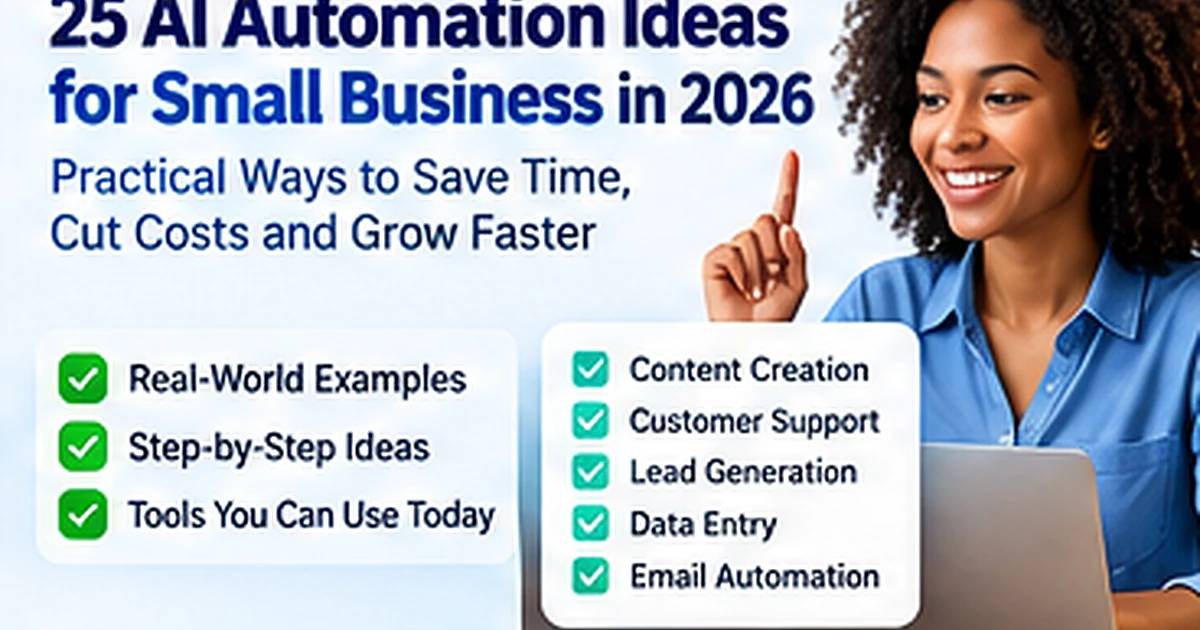
The best AI automation ideas are not flashy demonstrations; they remove repetitive work from a process that already has clear rules. Small businesses should begin with high-frequency, low-risk tasks and add human approval before money, deletion, legal commitments or sensitive communication.
25 AI Automation Ideas for Small Businesses
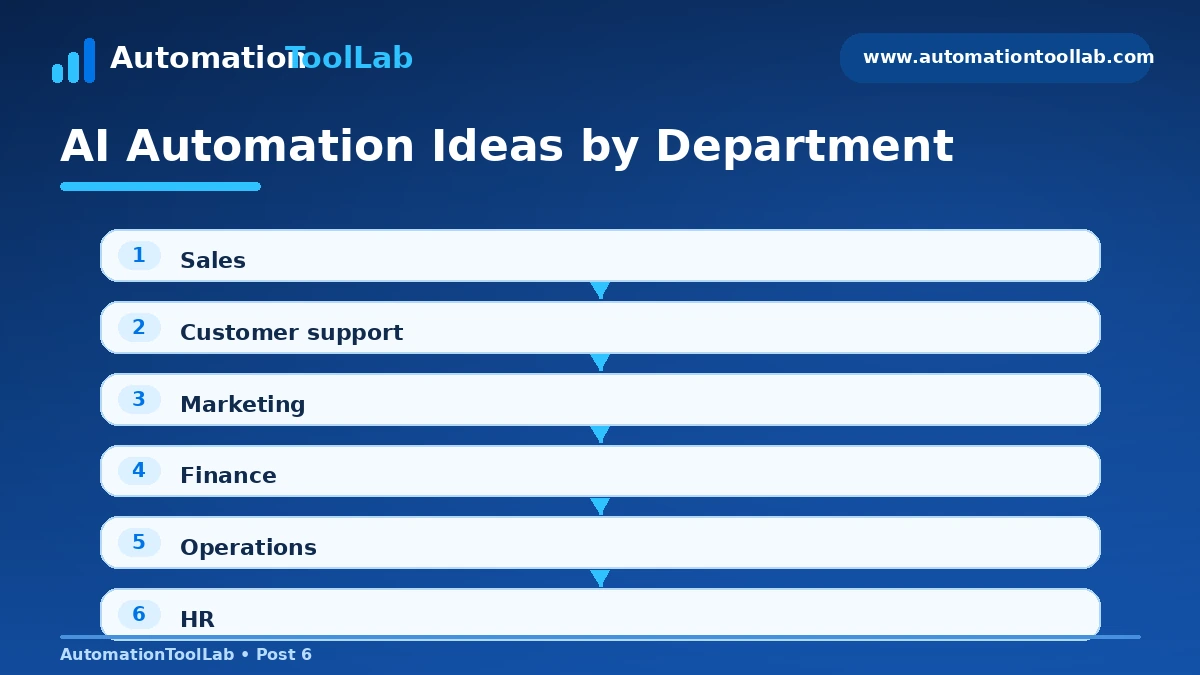
1. Lead qualification
Score inbound leads and route high-value prospects to sales. A practical implementation usually combines a trigger, business data, an AI classification or generation step, validation rules and a destination such as a CRM, help desk, spreadsheet or messaging channel.
Define the allowed inputs, the expected output format and the exception path before turning the workflow on. If the result can affect a customer, employee, payment or legal commitment, keep a human approval step until the workflow has a strong reliability record.
2. Meeting preparation
Summarize account history and open tasks before calls. A practical implementation usually combines a trigger, business data, an AI classification or generation step, validation rules and a destination such as a CRM, help desk, spreadsheet or messaging channel.
Define the allowed inputs, the expected output format and the exception path before turning the workflow on. If the result can affect a customer, employee, payment or legal commitment, keep a human approval step until the workflow has a strong reliability record.
3. Email triage
Classify inbound mail by urgency, customer type and next action. A practical implementation usually combines a trigger, business data, an AI classification or generation step, validation rules and a destination such as a CRM, help desk, spreadsheet or messaging channel.
Define the allowed inputs, the expected output format and the exception path before turning the workflow on. If the result can affect a customer, employee, payment or legal commitment, keep a human approval step until the workflow has a strong reliability record.
4. Customer support routing
Tag tickets, detect intent and route to the right queue. A practical implementation usually combines a trigger, business data, an AI classification or generation step, validation rules and a destination such as a CRM, help desk, spreadsheet or messaging channel.
Define the allowed inputs, the expected output format and the exception path before turning the workflow on. If the result can affect a customer, employee, payment or legal commitment, keep a human approval step until the workflow has a strong reliability record.
5. FAQ response drafting
Draft replies from an approved knowledge base for human review. A practical implementation usually combines a trigger, business data, an AI classification or generation step, validation rules and a destination such as a CRM, help desk, spreadsheet or messaging channel.
Define the allowed inputs, the expected output format and the exception path before turning the workflow on. If the result can affect a customer, employee, payment or legal commitment, keep a human approval step until the workflow has a strong reliability record.
6. Invoice data extraction
Extract vendor, amount, due date and line items from invoices. A practical implementation usually combines a trigger, business data, an AI classification or generation step, validation rules and a destination such as a CRM, help desk, spreadsheet or messaging channel.
Define the allowed inputs, the expected output format and the exception path before turning the workflow on. If the result can affect a customer, employee, payment or legal commitment, keep a human approval step until the workflow has a strong reliability record.
7. Expense categorization
Classify expenses and flag unusual transactions for review. A practical implementation usually combines a trigger, business data, an AI classification or generation step, validation rules and a destination such as a CRM, help desk, spreadsheet or messaging channel.
Define the allowed inputs, the expected output format and the exception path before turning the workflow on. If the result can affect a customer, employee, payment or legal commitment, keep a human approval step until the workflow has a strong reliability record.
8. CRM enrichment
Add company, industry and role data to new leads. A practical implementation usually combines a trigger, business data, an AI classification or generation step, validation rules and a destination such as a CRM, help desk, spreadsheet or messaging channel.
Define the allowed inputs, the expected output format and the exception path before turning the workflow on. If the result can affect a customer, employee, payment or legal commitment, keep a human approval step until the workflow has a strong reliability record.
9. Proposal drafting
Assemble first-draft proposals from CRM and discovery notes. A practical implementation usually combines a trigger, business data, an AI classification or generation step, validation rules and a destination such as a CRM, help desk, spreadsheet or messaging channel.
Define the allowed inputs, the expected output format and the exception path before turning the workflow on. If the result can affect a customer, employee, payment or legal commitment, keep a human approval step until the workflow has a strong reliability record.
10. Follow-up reminders
Trigger follow-ups when deals or projects are inactive. A practical implementation usually combines a trigger, business data, an AI classification or generation step, validation rules and a destination such as a CRM, help desk, spreadsheet or messaging channel.
Define the allowed inputs, the expected output format and the exception path before turning the workflow on. If the result can affect a customer, employee, payment or legal commitment, keep a human approval step until the workflow has a strong reliability record.
11. Content repurposing
Turn a long article or webinar into social and email drafts. A practical implementation usually combines a trigger, business data, an AI classification or generation step, validation rules and a destination such as a CRM, help desk, spreadsheet or messaging channel.
Define the allowed inputs, the expected output format and the exception path before turning the workflow on. If the result can affect a customer, employee, payment or legal commitment, keep a human approval step until the workflow has a strong reliability record.
12. SEO content briefs
Combine keyword, competitor and SERP notes into a structured brief. A practical implementation usually combines a trigger, business data, an AI classification or generation step, validation rules and a destination such as a CRM, help desk, spreadsheet or messaging channel.
Define the allowed inputs, the expected output format and the exception path before turning the workflow on. If the result can affect a customer, employee, payment or legal commitment, keep a human approval step until the workflow has a strong reliability record.
13. Review monitoring
Collect new reviews and route negative feedback for response. A practical implementation usually combines a trigger, business data, an AI classification or generation step, validation rules and a destination such as a CRM, help desk, spreadsheet or messaging channel.
Define the allowed inputs, the expected output format and the exception path before turning the workflow on. If the result can affect a customer, employee, payment or legal commitment, keep a human approval step until the workflow has a strong reliability record.
14. Social listening
Summarize brand or competitor mentions by theme. A practical implementation usually combines a trigger, business data, an AI classification or generation step, validation rules and a destination such as a CRM, help desk, spreadsheet or messaging channel.
Define the allowed inputs, the expected output format and the exception path before turning the workflow on. If the result can affect a customer, employee, payment or legal commitment, keep a human approval step until the workflow has a strong reliability record.
15. Recruitment screening support
Summarize candidate materials against documented criteria for human review. A practical implementation usually combines a trigger, business data, an AI classification or generation step, validation rules and a destination such as a CRM, help desk, spreadsheet or messaging channel.
Define the allowed inputs, the expected output format and the exception path before turning the workflow on. If the result can affect a customer, employee, payment or legal commitment, keep a human approval step until the workflow has a strong reliability record.
16. Employee onboarding
Create checklists and reminders after hire approval. A practical implementation usually combines a trigger, business data, an AI classification or generation step, validation rules and a destination such as a CRM, help desk, spreadsheet or messaging channel.
Define the allowed inputs, the expected output format and the exception path before turning the workflow on. If the result can affect a customer, employee, payment or legal commitment, keep a human approval step until the workflow has a strong reliability record.
17. Document classification
Label uploaded files and route them to the correct workflow. A practical implementation usually combines a trigger, business data, an AI classification or generation step, validation rules and a destination such as a CRM, help desk, spreadsheet or messaging channel.
Define the allowed inputs, the expected output format and the exception path before turning the workflow on. If the result can affect a customer, employee, payment or legal commitment, keep a human approval step until the workflow has a strong reliability record.
18. Contract intake
Extract key dates and parties for qualified review. A practical implementation usually combines a trigger, business data, an AI classification or generation step, validation rules and a destination such as a CRM, help desk, spreadsheet or messaging channel.
Define the allowed inputs, the expected output format and the exception path before turning the workflow on. If the result can affect a customer, employee, payment or legal commitment, keep a human approval step until the workflow has a strong reliability record.
19. Inventory alerts
Notify teams when stock reaches a threshold. A practical implementation usually combines a trigger, business data, an AI classification or generation step, validation rules and a destination such as a CRM, help desk, spreadsheet or messaging channel.
Define the allowed inputs, the expected output format and the exception path before turning the workflow on. If the result can affect a customer, employee, payment or legal commitment, keep a human approval step until the workflow has a strong reliability record.
20. Order exception handling
Flag failed payments or shipping exceptions. A practical implementation usually combines a trigger, business data, an AI classification or generation step, validation rules and a destination such as a CRM, help desk, spreadsheet or messaging channel.
Define the allowed inputs, the expected output format and the exception path before turning the workflow on. If the result can affect a customer, employee, payment or legal commitment, keep a human approval step until the workflow has a strong reliability record.
21. Daily KPI summary
Pull metrics from business systems into a concise report. A practical implementation usually combines a trigger, business data, an AI classification or generation step, validation rules and a destination such as a CRM, help desk, spreadsheet or messaging channel.
Define the allowed inputs, the expected output format and the exception path before turning the workflow on. If the result can affect a customer, employee, payment or legal commitment, keep a human approval step until the workflow has a strong reliability record.
22. Competitor monitoring
Track public changes to pricing, pages and messaging. A practical implementation usually combines a trigger, business data, an AI classification or generation step, validation rules and a destination such as a CRM, help desk, spreadsheet or messaging channel.
Define the allowed inputs, the expected output format and the exception path before turning the workflow on. If the result can affect a customer, employee, payment or legal commitment, keep a human approval step until the workflow has a strong reliability record.
23. Customer churn signals
Flag declining usage or unresolved support patterns. A practical implementation usually combines a trigger, business data, an AI classification or generation step, validation rules and a destination such as a CRM, help desk, spreadsheet or messaging channel.
Define the allowed inputs, the expected output format and the exception path before turning the workflow on. If the result can affect a customer, employee, payment or legal commitment, keep a human approval step until the workflow has a strong reliability record.
24. Renewal reminders
Create tasks before subscriptions renew. A practical implementation usually combines a trigger, business data, an AI classification or generation step, validation rules and a destination such as a CRM, help desk, spreadsheet or messaging channel.
Define the allowed inputs, the expected output format and the exception path before turning the workflow on. If the result can affect a customer, employee, payment or legal commitment, keep a human approval step until the workflow has a strong reliability record.
25. Executive weekly brief
Summarize sales, marketing, support and operations. A practical implementation usually combines a trigger, business data, an AI classification or generation step, validation rules and a destination such as a CRM, help desk, spreadsheet or messaging channel.
Define the allowed inputs, the expected output format and the exception path before turning the workflow on. If the result can affect a customer, employee, payment or legal commitment, keep a human approval step until the workflow has a strong reliability record.
Best Tools for These Automations
- AI workflow platforms such as Zapier, n8n, Make and Power Automate.
- AI agent builders for tool use and multi-step tasks.
- CRM-native automation for sales and lifecycle workflows.
- Marketing automation systems for segmentation and campaigns.
30-Day Implementation Plan
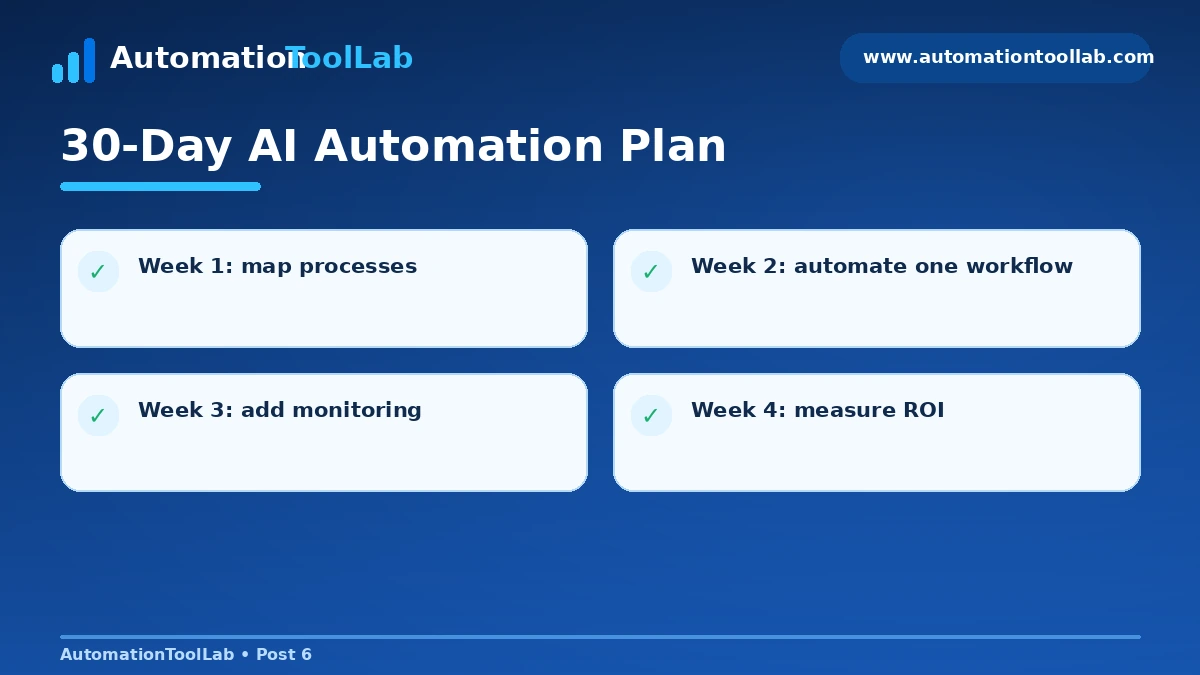
- Week 1: document three repetitive processes and baseline time spent.
- Week 2: automate one workflow with explicit human approval.
- Week 3: add monitoring, error handling and a second workflow.
- Week 4: measure hours saved, failure rate and business impact before scaling.
How AutomationToolLab Evaluates Automation Software
We compare platforms by integration coverage, workflow depth, AI capability, deployment model, governance, debugging, maintainability and total operating cost. The best product is the one that solves a real process reliably, not the one with the longest feature list.
Regional Buying Notes
This guide is written primarily for readers in the US, UK, Canada, Australia and India. Check local taxes, billing currency, privacy requirements, data-location needs and support hours before purchase. Self-hosting can matter more in technically sophisticated or regulated environments, while managed cloud tools can reduce operational overhead for smaller teams.
Related AutomationToolLab Guides
- Read related AutomationToolLab guide #1
- Read related AutomationToolLab guide #5
- Read related AutomationToolLab guide #12
Editorial Disclosure
AutomationToolLab is an independent educational site. Product prices, limits and features can change. Verify critical purchasing information on each vendor’s official website before committing to a plan or migrating production workflows.
For current business AI workspace options, review OpenAI Business pricing; for app-to-app automation pricing, review Zapier pricing.
Related Software Guides