ChatGPT Automation in 2026: 20 Business Workflows You Can Automate
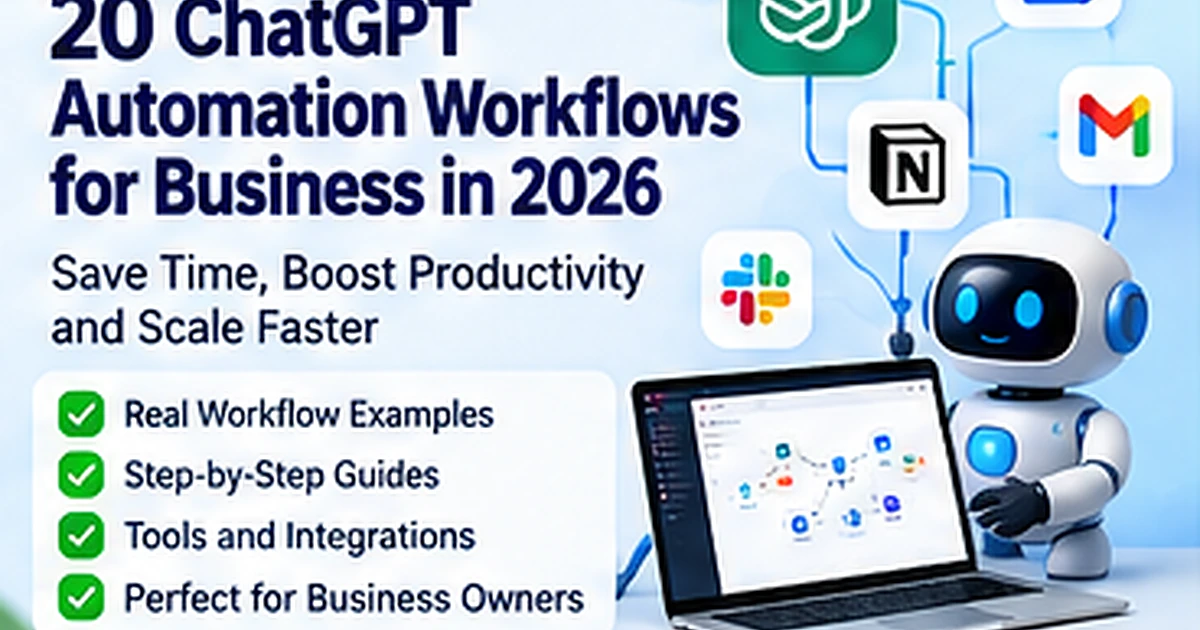
ChatGPT automation in 2026 is most useful when the model is connected to trusted business context and placed inside a workflow with clear permissions and review points. The objective is not to let AI act everywhere; it is to reduce repetitive knowledge work while keeping sensitive actions controlled.
OpenAI’s current Business offering includes ChatGPT, Work, Codex, connected apps and workspace agents. Standard seats are listed at $20/user/month billed annually or $25 monthly. Check current OpenAI Business pricing.
20 ChatGPT Business Workflows to Automate
1. Daily inbox summary
Summarize priority email from connected sources and highlight actions. Keep the final action inside an approval boundary if it changes customer data, sends external communication, commits money or deletes information.
Define the trusted data source, required output format, tool permissions and failure path before scaling. For recurring use, log enough context to diagnose mistakes without unnecessarily exposing sensitive information.
2. Meeting preparation
Assemble agenda, account context and open questions before a call. Keep the final action inside an approval boundary if it changes customer data, sends external communication, commits money or deletes information.
Define the trusted data source, required output format, tool permissions and failure path before scaling. For recurring use, log enough context to diagnose mistakes without unnecessarily exposing sensitive information.
3. Meeting follow-up
Draft notes, decisions and action items for review. Keep the final action inside an approval boundary if it changes customer data, sends external communication, commits money or deletes information.
Define the trusted data source, required output format, tool permissions and failure path before scaling. For recurring use, log enough context to diagnose mistakes without unnecessarily exposing sensitive information.
4. Lead research
Summarize public company information and prepare discovery questions. Keep the final action inside an approval boundary if it changes customer data, sends external communication, commits money or deletes information.
Define the trusted data source, required output format, tool permissions and failure path before scaling. For recurring use, log enough context to diagnose mistakes without unnecessarily exposing sensitive information.
5. Sales call preparation
Turn CRM context into a concise briefing. Keep the final action inside an approval boundary if it changes customer data, sends external communication, commits money or deletes information.
Define the trusted data source, required output format, tool permissions and failure path before scaling. For recurring use, log enough context to diagnose mistakes without unnecessarily exposing sensitive information.
6. Proposal first draft
Generate structured proposal language from approved discovery notes. Keep the final action inside an approval boundary if it changes customer data, sends external communication, commits money or deletes information.
Define the trusted data source, required output format, tool permissions and failure path before scaling. For recurring use, log enough context to diagnose mistakes without unnecessarily exposing sensitive information.
7. Customer support triage
Classify requests and draft responses grounded in approved knowledge. Keep the final action inside an approval boundary if it changes customer data, sends external communication, commits money or deletes information.
Define the trusted data source, required output format, tool permissions and failure path before scaling. For recurring use, log enough context to diagnose mistakes without unnecessarily exposing sensitive information.
8. Knowledge-base drafting
Turn solved support cases into article drafts. Keep the final action inside an approval boundary if it changes customer data, sends external communication, commits money or deletes information.
Define the trusted data source, required output format, tool permissions and failure path before scaling. For recurring use, log enough context to diagnose mistakes without unnecessarily exposing sensitive information.
9. Content brief creation
Organize keyword, audience and competitor inputs into an editorial brief. Keep the final action inside an approval boundary if it changes customer data, sends external communication, commits money or deletes information.
Define the trusted data source, required output format, tool permissions and failure path before scaling. For recurring use, log enough context to diagnose mistakes without unnecessarily exposing sensitive information.
10. Content repurposing
Turn one long-form asset into social and email drafts. Keep the final action inside an approval boundary if it changes customer data, sends external communication, commits money or deletes information.
Define the trusted data source, required output format, tool permissions and failure path before scaling. For recurring use, log enough context to diagnose mistakes without unnecessarily exposing sensitive information.
11. Executive weekly brief
Summarize updates across connected work sources. Keep the final action inside an approval boundary if it changes customer data, sends external communication, commits money or deletes information.
Define the trusted data source, required output format, tool permissions and failure path before scaling. For recurring use, log enough context to diagnose mistakes without unnecessarily exposing sensitive information.
12. Project status summary
Combine tasks, blockers and recent activity into a status update. Keep the final action inside an approval boundary if it changes customer data, sends external communication, commits money or deletes information.
Define the trusted data source, required output format, tool permissions and failure path before scaling. For recurring use, log enough context to diagnose mistakes without unnecessarily exposing sensitive information.
13. Document comparison
Compare document versions and surface material changes for review. Keep the final action inside an approval boundary if it changes customer data, sends external communication, commits money or deletes information.
Define the trusted data source, required output format, tool permissions and failure path before scaling. For recurring use, log enough context to diagnose mistakes without unnecessarily exposing sensitive information.
14. Research synthesis
Combine approved sources into a structured memo. Keep the final action inside an approval boundary if it changes customer data, sends external communication, commits money or deletes information.
Define the trusted data source, required output format, tool permissions and failure path before scaling. For recurring use, log enough context to diagnose mistakes without unnecessarily exposing sensitive information.
15. Spreadsheet explanation
Explain anomalies and trends from business data. Keep the final action inside an approval boundary if it changes customer data, sends external communication, commits money or deletes information.
Define the trusted data source, required output format, tool permissions and failure path before scaling. For recurring use, log enough context to diagnose mistakes without unnecessarily exposing sensitive information.
16. Recruiting coordination
Draft interview questions and scheduling communications. Keep the final action inside an approval boundary if it changes customer data, sends external communication, commits money or deletes information.
Define the trusted data source, required output format, tool permissions and failure path before scaling. For recurring use, log enough context to diagnose mistakes without unnecessarily exposing sensitive information.
17. Onboarding assistant
Answer approved employee onboarding questions and surface tasks. Keep the final action inside an approval boundary if it changes customer data, sends external communication, commits money or deletes information.
Define the trusted data source, required output format, tool permissions and failure path before scaling. For recurring use, log enough context to diagnose mistakes without unnecessarily exposing sensitive information.
18. SOP drafting
Turn process notes into a structured standard operating procedure. Keep the final action inside an approval boundary if it changes customer data, sends external communication, commits money or deletes information.
Define the trusted data source, required output format, tool permissions and failure path before scaling. For recurring use, log enough context to diagnose mistakes without unnecessarily exposing sensitive information.
19. Vendor comparison
Create a decision matrix from current vendor information. Keep the final action inside an approval boundary if it changes customer data, sends external communication, commits money or deletes information.
Define the trusted data source, required output format, tool permissions and failure path before scaling. For recurring use, log enough context to diagnose mistakes without unnecessarily exposing sensitive information.
20. Automation design assistant
Turn a manual process into a proposed trigger-action workflow. Keep the final action inside an approval boundary if it changes customer data, sends external communication, commits money or deletes information.
Define the trusted data source, required output format, tool permissions and failure path before scaling. For recurring use, log enough context to diagnose mistakes without unnecessarily exposing sensitive information.
How to Connect ChatGPT to Business Workflows
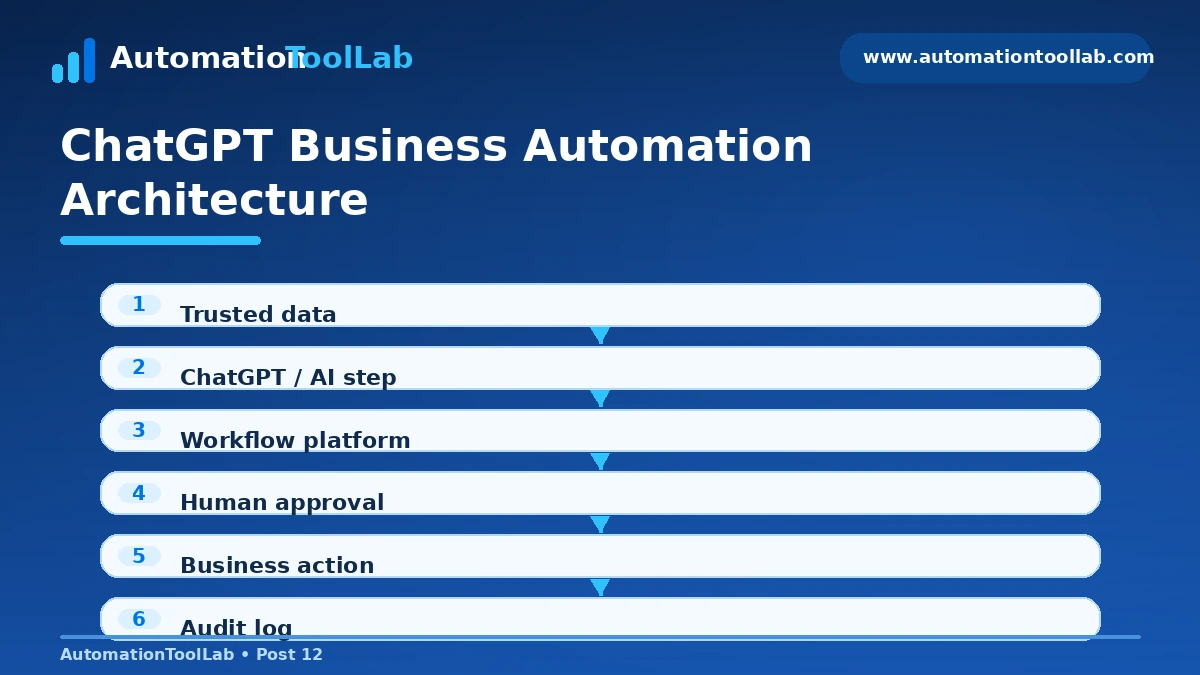
- Use connected apps or workspace context when available and authorized.
- Use Zapier, n8n, Make or Power Automate for event-driven workflows.
- Use APIs for custom systems when engineering support is available.
- Define what data may be sent to a model and what must remain restricted.
- Log high-impact actions and require human approval where appropriate.
Security and Governance Checklist
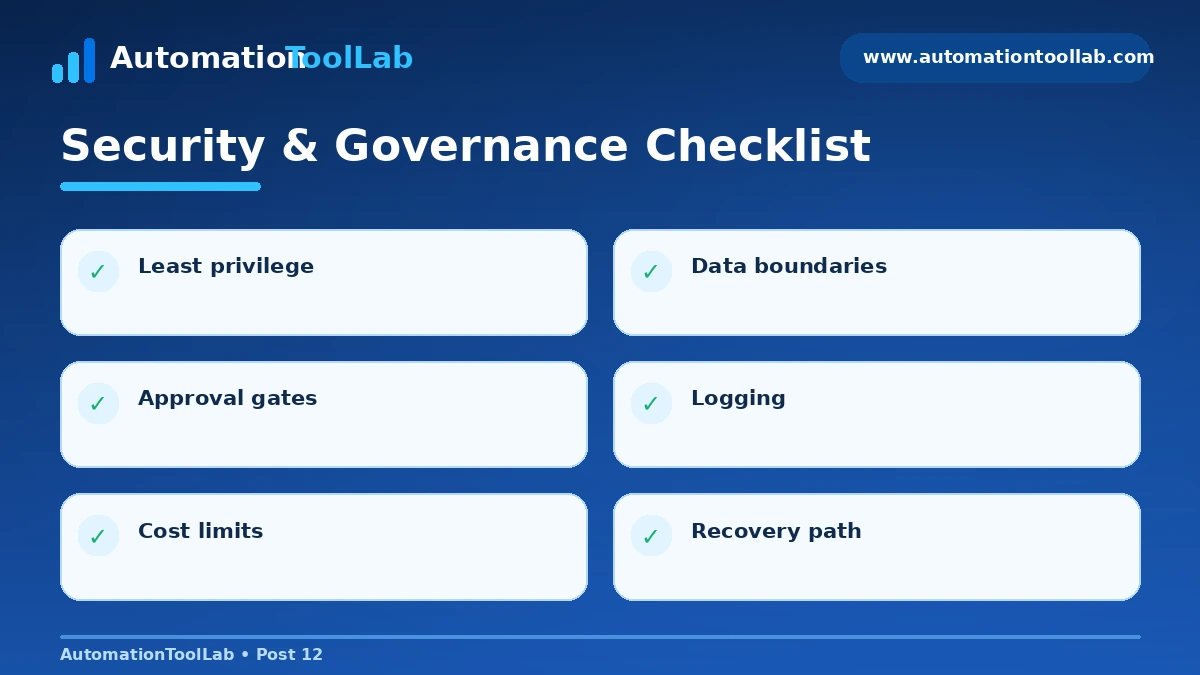
- Use least privilege for connected apps.
- Do not expose passwords or long-lived secrets in prompts.
- Separate draft generation from irreversible actions.
- Review data retention and organizational policies.
- Monitor costs, error rates and unexpected tool calls.
- Provide a clear human escalation path.
How AutomationToolLab Evaluates Automation Software
We compare platforms by integration coverage, workflow depth, AI capability, deployment model, governance, debugging, maintainability and total operating cost. The best product is the one that solves a real process reliably, not the one with the longest feature list.
Regional Buying Notes
This guide is written primarily for readers in the US, UK, Canada, Australia and India. Check local taxes, billing currency, privacy requirements, data-location needs and support hours before purchase. Self-hosting can matter more in technically sophisticated or regulated environments, while managed cloud tools can reduce operational overhead for smaller teams.
Related AutomationToolLab Guides
- Read related AutomationToolLab guide #1
- Read related AutomationToolLab guide #5
- Read related AutomationToolLab guide #6
Editorial Disclosure
AutomationToolLab is an independent educational site. Product prices, limits and features can change. Verify critical purchasing information on each vendor’s official website before committing to a plan or migrating production workflows.
Related Software Guides