Best AI Agent Builders in 2026: 12 Platforms for Business Automation
AI agent builders go beyond ordinary chatbots: the goal is to use tools, maintain state and complete multi-step work under defined controls. In 2026 the market spans no-code business agents, automation-native agents and developer frameworks.
In 2026, workflow automation increasingly combines traditional triggers and actions with AI classification, generation, tool use and human approvals. That makes platform choice more consequential: cost, permissions, observability and maintainability matter as much as connector count.
Quick Comparison
| Platform | Best for | Standout strength | Watch-out |
|---|---|---|---|
| OpenAI workspace agents / Work | Knowledge-work teams | Connected workspaces, research and multi-step work | Requires clear data and approval boundaries |
| Microsoft Copilot Studio | Microsoft-centric enterprises | Agents across Microsoft data and business systems | Best value inside Microsoft ecosystem |
| Zapier Agents | SaaS-heavy SMB teams | Agents can act across Zapier’s app ecosystem | Usage pricing needs modeling |
| n8n | Technical agent workflows | AI nodes, tools and self-hosted orchestration | More technical setup |
| Lindy | Operations and executive workflows | AI teammates with actions and approvals | Credit-based economics |
| Gumloop | AI workflow builders | AI-centric agent and workflow design | Usage costs vary by AI workload |
| Relevance AI | Business agent teams | Agent workforce concepts and multi-agent workflows | Evaluate governance for production |
| CrewAI | Developers building multi-agent systems | Open-source framework for agent teams | Code-first |
| LangGraph | Engineering teams | Stateful controllable agent graphs | Engineering expertise required |
| Salesforce Agentforce | Salesforce organizations | Agents embedded in CRM and enterprise data | Most compelling for Salesforce users |
| Google Vertex AI Agent Builder | Google Cloud teams | Enterprise agents grounded in Google Cloud | Cloud architecture knowledge needed |
| ServiceNow AI Agents | IT and service operations | Agents tied to enterprise service workflows | Enterprise-oriented |
OpenAI’s current Business offering includes ChatGPT, Work, Codex, connected apps and workspace agents; Standard seats are listed at $20/user/month billed annually or $25 monthly. Verify OpenAI Business pricing.
What Matters Before You Choose
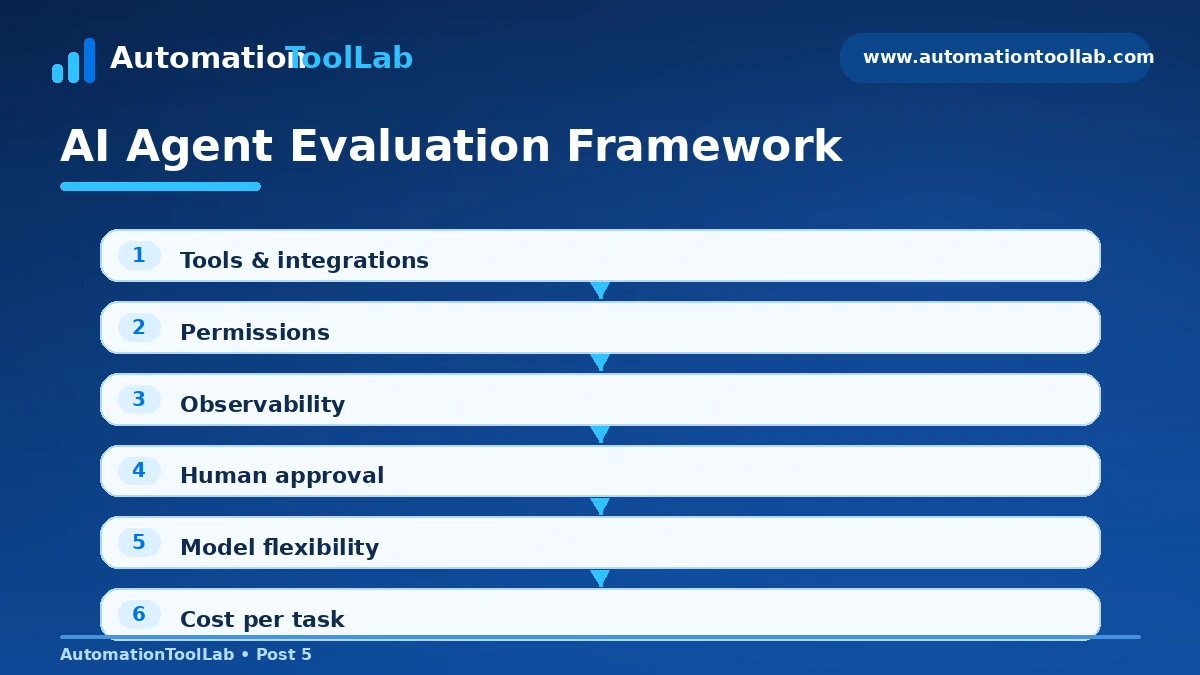
- Native support for the applications your business actually uses.
- Reliable branching, retries, scheduling, webhooks and data transformation.
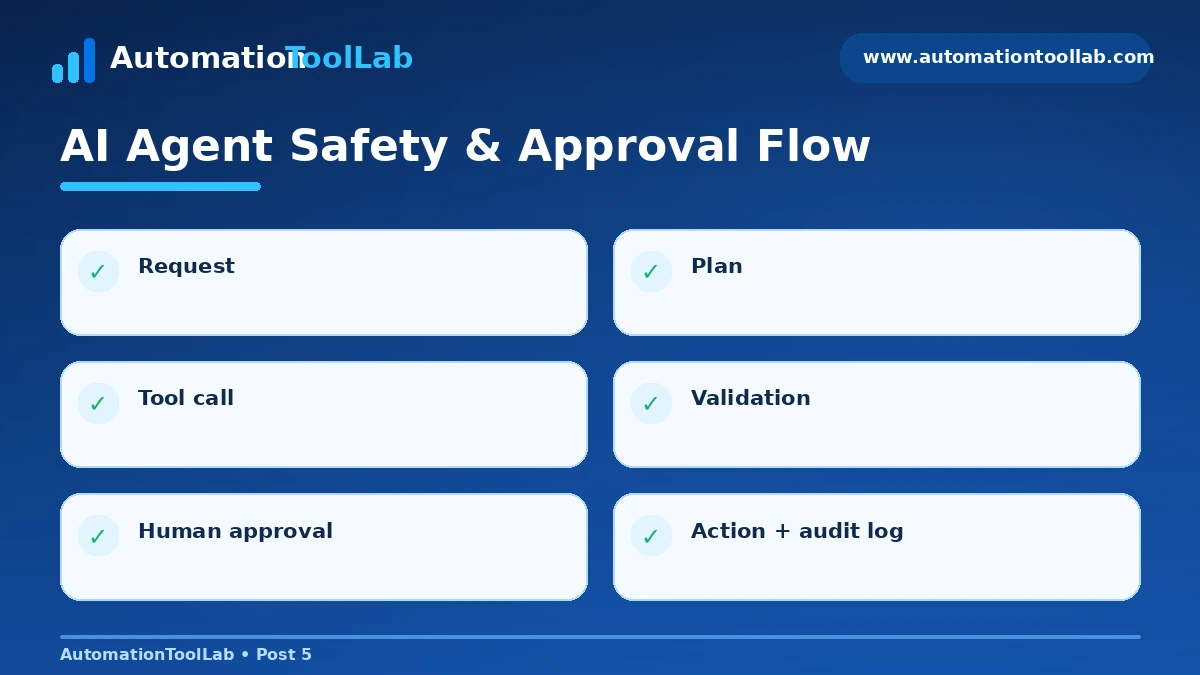
- AI features that can be constrained, validated and placed behind human approval.
- Clear pricing mechanics at your expected monthly volume.
- Permissions, audit logs, versioning and environment separation for team use.
- Debugging tools that show exactly where and why a workflow failed.
OpenAI workspace agents / Work
Best for: Knowledge-work teams. Main strength: Connected workspaces, research and multi-step work. Watch-out: Requires clear data and approval boundaries.
For a production evaluation of OpenAI workspace agents / Work, build one representative workflow with real branching, authentication, retries and expected monthly volume. Test the workflow when an upstream app returns missing fields, when a credential expires and when the destination is rate-limited. Those failure cases reveal more than a polished demo.
Also assign an owner for the automation. Document the trigger, connected systems, data fields, expected output, error path and rollback procedure. Reliable automation is an operational asset only when somebody can understand and maintain it six months later.
Microsoft Copilot Studio
Best for: Microsoft-centric enterprises. Main strength: Agents across Microsoft data and business systems. Watch-out: Best value inside Microsoft ecosystem.
For a production evaluation of Microsoft Copilot Studio, build one representative workflow with real branching, authentication, retries and expected monthly volume. Test the workflow when an upstream app returns missing fields, when a credential expires and when the destination is rate-limited. Those failure cases reveal more than a polished demo.
Also assign an owner for the automation. Document the trigger, connected systems, data fields, expected output, error path and rollback procedure. Reliable automation is an operational asset only when somebody can understand and maintain it six months later.
Zapier Agents
Best for: SaaS-heavy SMB teams. Main strength: Agents can act across Zapier’s app ecosystem. Watch-out: Usage pricing needs modeling.
For a production evaluation of Zapier Agents, build one representative workflow with real branching, authentication, retries and expected monthly volume. Test the workflow when an upstream app returns missing fields, when a credential expires and when the destination is rate-limited. Those failure cases reveal more than a polished demo.
Also assign an owner for the automation. Document the trigger, connected systems, data fields, expected output, error path and rollback procedure. Reliable automation is an operational asset only when somebody can understand and maintain it six months later.
n8n
Best for: Technical agent workflows. Main strength: AI nodes, tools and self-hosted orchestration. Watch-out: More technical setup.
For a production evaluation of n8n, build one representative workflow with real branching, authentication, retries and expected monthly volume. Test the workflow when an upstream app returns missing fields, when a credential expires and when the destination is rate-limited. Those failure cases reveal more than a polished demo.
Also assign an owner for the automation. Document the trigger, connected systems, data fields, expected output, error path and rollback procedure. Reliable automation is an operational asset only when somebody can understand and maintain it six months later.
Lindy
Best for: Operations and executive workflows. Main strength: AI teammates with actions and approvals. Watch-out: Credit-based economics.
For a production evaluation of Lindy, build one representative workflow with real branching, authentication, retries and expected monthly volume. Test the workflow when an upstream app returns missing fields, when a credential expires and when the destination is rate-limited. Those failure cases reveal more than a polished demo.
Also assign an owner for the automation. Document the trigger, connected systems, data fields, expected output, error path and rollback procedure. Reliable automation is an operational asset only when somebody can understand and maintain it six months later.
Gumloop
Best for: AI workflow builders. Main strength: AI-centric agent and workflow design. Watch-out: Usage costs vary by AI workload.
For a production evaluation of Gumloop, build one representative workflow with real branching, authentication, retries and expected monthly volume. Test the workflow when an upstream app returns missing fields, when a credential expires and when the destination is rate-limited. Those failure cases reveal more than a polished demo.
Also assign an owner for the automation. Document the trigger, connected systems, data fields, expected output, error path and rollback procedure. Reliable automation is an operational asset only when somebody can understand and maintain it six months later.
Relevance AI
Best for: Business agent teams. Main strength: Agent workforce concepts and multi-agent workflows. Watch-out: Evaluate governance for production.
For a production evaluation of Relevance AI, build one representative workflow with real branching, authentication, retries and expected monthly volume. Test the workflow when an upstream app returns missing fields, when a credential expires and when the destination is rate-limited. Those failure cases reveal more than a polished demo.
Also assign an owner for the automation. Document the trigger, connected systems, data fields, expected output, error path and rollback procedure. Reliable automation is an operational asset only when somebody can understand and maintain it six months later.
CrewAI
Best for: Developers building multi-agent systems. Main strength: Open-source framework for agent teams. Watch-out: Code-first.
For a production evaluation of CrewAI, build one representative workflow with real branching, authentication, retries and expected monthly volume. Test the workflow when an upstream app returns missing fields, when a credential expires and when the destination is rate-limited. Those failure cases reveal more than a polished demo.
Also assign an owner for the automation. Document the trigger, connected systems, data fields, expected output, error path and rollback procedure. Reliable automation is an operational asset only when somebody can understand and maintain it six months later.
LangGraph
Best for: Engineering teams. Main strength: Stateful controllable agent graphs. Watch-out: Engineering expertise required.
For a production evaluation of LangGraph, build one representative workflow with real branching, authentication, retries and expected monthly volume. Test the workflow when an upstream app returns missing fields, when a credential expires and when the destination is rate-limited. Those failure cases reveal more than a polished demo.
Also assign an owner for the automation. Document the trigger, connected systems, data fields, expected output, error path and rollback procedure. Reliable automation is an operational asset only when somebody can understand and maintain it six months later.
Salesforce Agentforce
Best for: Salesforce organizations. Main strength: Agents embedded in CRM and enterprise data. Watch-out: Most compelling for Salesforce users.
For a production evaluation of Salesforce Agentforce, build one representative workflow with real branching, authentication, retries and expected monthly volume. Test the workflow when an upstream app returns missing fields, when a credential expires and when the destination is rate-limited. Those failure cases reveal more than a polished demo.
Also assign an owner for the automation. Document the trigger, connected systems, data fields, expected output, error path and rollback procedure. Reliable automation is an operational asset only when somebody can understand and maintain it six months later.
Google Vertex AI Agent Builder
Best for: Google Cloud teams. Main strength: Enterprise agents grounded in Google Cloud. Watch-out: Cloud architecture knowledge needed.
For a production evaluation of Google Vertex AI Agent Builder, build one representative workflow with real branching, authentication, retries and expected monthly volume. Test the workflow when an upstream app returns missing fields, when a credential expires and when the destination is rate-limited. Those failure cases reveal more than a polished demo.
Also assign an owner for the automation. Document the trigger, connected systems, data fields, expected output, error path and rollback procedure. Reliable automation is an operational asset only when somebody can understand and maintain it six months later.
ServiceNow AI Agents
Best for: IT and service operations. Main strength: Agents tied to enterprise service workflows. Watch-out: Enterprise-oriented.
For a production evaluation of ServiceNow AI Agents, build one representative workflow with real branching, authentication, retries and expected monthly volume. Test the workflow when an upstream app returns missing fields, when a credential expires and when the destination is rate-limited. Those failure cases reveal more than a polished demo.
Also assign an owner for the automation. Document the trigger, connected systems, data fields, expected output, error path and rollback procedure. Reliable automation is an operational asset only when somebody can understand and maintain it six months later.
How to Run a 7-Day Proof of Concept
- Choose one real process that happens every day or every week.
- Measure the current manual time and error rate.
- Build the same workflow in your top two candidate platforms.
- Test normal data, missing data, duplicates and API failures.
- Estimate monthly usage from real transaction volume rather than the vendor demo.
- Have the eventual workflow owner make one change without outside help.
- Select the platform with the best combination of reliability, maintainability and cost.
How AutomationToolLab Evaluates Automation Software
We compare platforms by integration coverage, workflow depth, AI capability, deployment model, governance, debugging, maintainability and total operating cost. The best product is the one that solves a real process reliably, not the one with the longest feature list.
Regional Buying Notes
This guide is written primarily for readers in the US, UK, Canada and Australia. Check local taxes, billing currency, privacy requirements, data-location needs and support hours before purchase. Self-hosting can matter more in technically sophisticated or regulated environments, while managed cloud tools can reduce operational overhead for smaller teams.
Related AutomationToolLab Guides
- Read related AutomationToolLab guide #1
- Read related AutomationToolLab guide #6
- Read related AutomationToolLab guide #12
Editorial Disclosure
AutomationToolLab is an independent educational site. Product prices, limits and features can change. Verify critical purchasing information on each vendor’s official website before committing to a plan or migrating production workflows.
Related Software Guides