
Best Project Management Software for Small Businesses in 2027
Compare project management software for small businesses in 2027, including ClickUp, Asana, monday.com, Trello and Notion for global teams.
best project management software is the primary search intent for this guide. The best project management software makes it obvious what must be done, who owns it and when it is due. Small businesses need enough structure to coordinate work without turning project administration into a second job.
This article is written for a global AutomationToolLab audience, including buyers in the United States, United Kingdom, Canada, India, Germany, France and other major software markets.
Pricing and plan details were checked against vendor pages in November 2026. Vendors can change packaging, taxes, regional pricing and promotions, so verify current terms before purchasing.
Quick Comparison
| Option | Best fit |
|---|---|
| ClickUp | All-in-one work management |
| Asana | Structured cross-team execution |
| monday.com | Visual and customizable workflows |
| Trello | Simple Kanban project tracking |
| Notion | Projects plus internal knowledge |
What to Compare Before You Buy
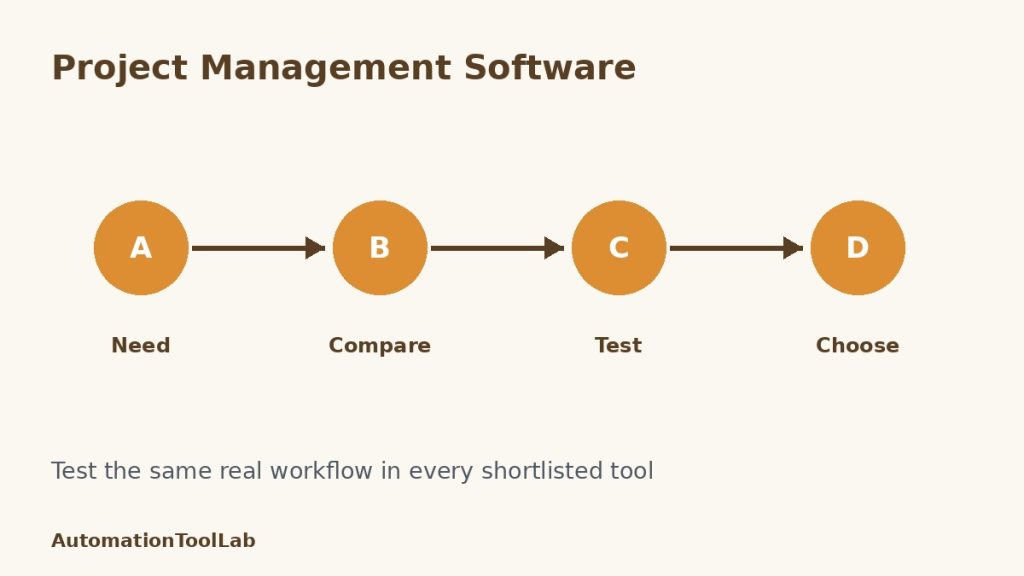
The best product is the one that fits the process your business actually uses. Start by writing down the current workflow, the people responsible for it and the information that moves between systems. Then decide which steps must remain human decisions and which repetitive steps can be automated safely.
- task ownership
- deadlines and dependencies
- board, list and timeline views
- templates
- automation
- guest access
- permissions
- reporting
- mobile access
- exports and API
Do not evaluate these criteria in isolation. Ease of use is valuable only if the platform can support the required process, while advanced functionality is wasted if the team cannot maintain it. For related implementation guidance, see Notion for Business and No-code automation tools.
1. ClickUp — All-in-one work management
ClickUp: ClickUp combines tasks, docs, boards, calendars, forms, chat and automation. Its breadth is useful for companies trying to centralize work, but teams should create shared statuses, fields and templates instead of allowing every project to develop its own system.
During a trial, use one representative workflow rather than only exploring menus. Import realistic sample data, connect the integrations you depend on and check what happens when a field is missing, a credential expires or an external service is unavailable. These tests reveal operational fit better than a polished demo.
2. Asana — Structured cross-team execution
Asana: Asana is strong at task ownership, projects, timelines, dependencies and cross-functional coordination. It works well when marketing, operations, product and service teams need shared visibility without forcing all work into the same view.
During a trial, use one representative workflow rather than only exploring menus. Import realistic sample data, connect the integrations you depend on and check what happens when a field is missing, a credential expires or an external service is unavailable. These tests reveal operational fit better than a polished demo.
3. monday.com — Visual and customizable workflows
monday.com: monday.com uses customizable boards for projects and operational processes. Its flexibility makes it suitable for client onboarding, content operations and repeatable business workflows. Governance is important because excessive customization can create inconsistent data.
During a trial, use one representative workflow rather than only exploring menus. Import realistic sample data, connect the integrations you depend on and check what happens when a field is missing, a credential expires or an external service is unavailable. These tests reveal operational fit better than a polished demo.
4. Trello — Simple Kanban project tracking
Trello: Trello's board, list and card model is easy for new teams to understand. It is well suited to straightforward workflows, editorial calendars and small projects, while complex portfolios and resource planning may require a more structured platform.
During a trial, use one representative workflow rather than only exploring menus. Import realistic sample data, connect the integrations you depend on and check what happens when a field is missing, a credential expires or an external service is unavailable. These tests reveal operational fit better than a polished demo.
5. Notion — Projects plus internal knowledge
Notion: Notion combines documentation, databases and project tracking. It is useful when project plans, procedures, research and meeting notes should live together. Knowledge-heavy businesses often value that context even if they use another tool for complex portfolio management.
During a trial, use one representative workflow rather than only exploring menus. Import realistic sample data, connect the integrations you depend on and check what happens when a field is missing, a credential expires or an external service is unavailable. These tests reveal operational fit better than a polished demo.
Pricing and Total Cost of Ownership
Headline subscription prices rarely tell the whole story. Calculate the cost at your expected team size and usage level twelve months from now. Include paid add-ons, automation or AI limits, external integrations, implementation time, premium support, taxes and currency conversion. A cheap entry tier can become expensive when essential capabilities sit behind higher plans.
Also consider switching cost. Export options, API access, naming standards and clean data make future migration easier. Businesses should own their operational records and be able to move them without rebuilding everything from screenshots or manual copy-and-paste.
Global Buying Considerations
Remote and international teams should prioritize asynchronous clarity, notification controls, guest access and reliable mobile apps. Privacy, local billing, support hours and data-location expectations can differ across the US, UK, Canada, India, Germany and France.
Support hours and language availability also matter for distributed teams. Before committing, confirm invoicing, tax documentation, data-processing agreements, security documentation and whether the vendor can meet your organization’s procurement requirements.
Implementation Plan
- Week 1: define the workflow, owners, data and success measures.
- Week 2: test two or three shortlisted products using the same realistic scenario.
- Week 3: configure permissions, integrations, automation and reporting.
- Week 4: measure adoption, errors, time saved and operational friction before expanding.
Common Mistakes to Avoid
Do not migrate every historical record before confirming the new structure. Do not automate an unclear process. Do not give every user administrator permissions. Do not rely on one employee to understand all integrations. And do not publish or send customer-facing automation without a documented review and rollback path.
Keep configuration simple enough that another trained team member can understand it. Complexity should solve a real requirement, not demonstrate how many features the platform provides.
Frequently Asked Questions
Should a small business choose the cheapest plan?
Not automatically. The lowest plan is useful only when it includes the capabilities, limits and support your process requires. Compare total annual cost at realistic usage.
How many products should I trial?
Usually two or three serious candidates are enough. Testing too many platforms can consume time without improving the decision. Use the same evaluation scenario for each.
Should I automate immediately?
Start with stable, repetitive administration. Add more complex automation only after the team understands the underlying process and knows how to monitor failures.
What matters most for international teams?
In addition to features and price, check data protection, billing, tax, support hours, language, data location and integration availability in the countries where the organization operates.
Final Recommendation
Shortlist the products that match your real workflow, test them with realistic data and choose the one your team can operate consistently. Good software should improve visibility, repeatability and accountability without creating hidden maintenance work. Recheck pricing and plan limits immediately before purchase because vendors can change them.
best project management software: Practical Evaluation Notes
Do not choose software from a feature checklist alone. Use a realistic trial with the same team roles, data, integrations and reporting needs the product will face after purchase. Test imports, permissions, notifications, exports and failure handling. If the product supports automation, deliberately create one failed workflow and verify that the system explains what happened and how to recover.
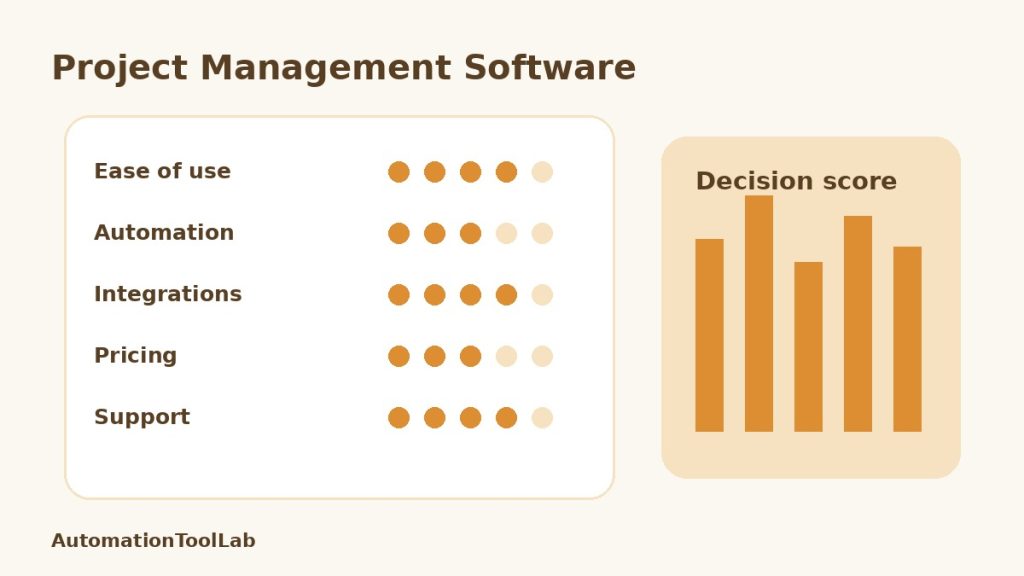
Record the result in a simple scorecard. Separate must-have requirements from conveniences and compare total expected cost rather than only the advertised entry price. Include seats, add-ons, usage limits, support, implementation time and any external services required to make the workflow complete.
best project management software: Governance and Ongoing Maintenance
Assign an owner for billing, permissions, integrations and configuration. Review access regularly, remove abandoned automations and keep a short change log when business-critical workflows are modified. Small businesses often accumulate hidden dependencies because several tools exchange data in the background.
Also define an exit plan before the platform becomes deeply embedded. Confirm that important records, templates, reports and configuration data can be exported in a usable format. Portability matters for growing international organizations whose privacy, tax, support and data-location requirements may change.
best project management software: Practical Evaluation Notes
Do not choose software from a feature checklist alone. Use a realistic trial with the same team roles, data, integrations and reporting needs the product will face after purchase. Test imports, permissions, notifications, exports and failure handling. If the product supports automation, deliberately create one failed workflow and verify that the system explains what happened and how to recover.
Record the result in a simple scorecard. Separate must-have requirements from conveniences and compare total expected cost rather than only the advertised entry price. Include seats, add-ons, usage limits, support, implementation time and any external services required to make the workflow complete.
best project management software: Governance and Ongoing Maintenance
Assign an owner for billing, permissions, integrations and configuration. Review access regularly, remove abandoned automations and keep a short change log when business-critical workflows are modified. Small businesses often accumulate hidden dependencies because several tools exchange data in the background.
Also define an exit plan before the platform becomes deeply embedded. Confirm that important records, templates, reports and configuration data can be exported in a usable format. Portability matters for growing international organizations whose privacy, tax, support and data-location requirements may change.
best project management software: Practical Evaluation Notes
Do not choose software from a feature checklist alone. Use a realistic trial with the same team roles, data, integrations and reporting needs the product will face after purchase. Test imports, permissions, notifications, exports and failure handling. If the product supports automation, deliberately create one failed workflow and verify that the system explains what happened and how to recover.
Record the result in a simple scorecard. Separate must-have requirements from conveniences and compare total expected cost rather than only the advertised entry price. Include seats, add-ons, usage limits, support, implementation time and any external services required to make the workflow complete.
best project management software: Governance and Ongoing Maintenance
Assign an owner for billing, permissions, integrations and configuration. Review access regularly, remove abandoned automations and keep a short change log when business-critical workflows are modified. Small businesses often accumulate hidden dependencies because several tools exchange data in the background.
Also define an exit plan before the platform becomes deeply embedded. Confirm that important records, templates, reports and configuration data can be exported in a usable format. Portability matters for growing international organizations whose privacy, tax, support and data-location requirements may change.
best project management software: Practical Evaluation Notes
Do not choose software from a feature checklist alone. Use a realistic trial with the same team roles, data, integrations and reporting needs the product will face after purchase. Test imports, permissions, notifications, exports and failure handling. If the product supports automation, deliberately create one failed workflow and verify that the system explains what happened and how to recover.
Record the result in a simple scorecard. Separate must-have requirements from conveniences and compare total expected cost rather than only the advertised entry price. Include seats, add-ons, usage limits, support, implementation time and any external services required to make the workflow complete.
best project management software: Governance and Ongoing Maintenance
Assign an owner for billing, permissions, integrations and configuration. Review access regularly, remove abandoned automations and keep a short change log when business-critical workflows are modified. Small businesses often accumulate hidden dependencies because several tools exchange data in the background.
Also define an exit plan before the platform becomes deeply embedded. Confirm that important records, templates, reports and configuration data can be exported in a usable format. Portability matters for growing international organizations whose privacy, tax, support and data-location requirements may change.
best project management software: Practical Evaluation Notes
Do not choose software from a feature checklist alone. Use a realistic trial with the same team roles, data, integrations and reporting needs the product will face after purchase. Test imports, permissions, notifications, exports and failure handling. If the product supports automation, deliberately create one failed workflow and verify that the system explains what happened and how to recover.
Record the result in a simple scorecard. Separate must-have requirements from conveniences and compare total expected cost rather than only the advertised entry price. Include seats, add-ons, usage limits, support, implementation time and any external services required to make the workflow complete.
best project management software: Governance and Ongoing Maintenance
Assign an owner for billing, permissions, integrations and configuration. Review access regularly, remove abandoned automations and keep a short change log when business-critical workflows are modified. Small businesses often accumulate hidden dependencies because several tools exchange data in the background.
Also define an exit plan before the platform becomes deeply embedded. Confirm that important records, templates, reports and configuration data can be exported in a usable format. Portability matters for growing international organizations whose privacy, tax, support and data-location requirements may change.
best project management software: Practical Evaluation Notes
Do not choose software from a feature checklist alone. Use a realistic trial with the same team roles, data, integrations and reporting needs the product will face after purchase. Test imports, permissions, notifications, exports and failure handling. If the product supports automation, deliberately create one failed workflow and verify that the system explains what happened and how to recover.
Record the result in a simple scorecard. Separate must-have requirements from conveniences and compare total expected cost rather than only the advertised entry price. Include seats, add-ons, usage limits, support, implementation time and any external services required to make the workflow complete.
best project management software: Governance and Ongoing Maintenance
Assign an owner for billing, permissions, integrations and configuration. Review access regularly, remove abandoned automations and keep a short change log when business-critical workflows are modified. Small businesses often accumulate hidden dependencies because several tools exchange data in the background.
Also define an exit plan before the platform becomes deeply embedded. Confirm that important records, templates, reports and configuration data can be exported in a usable format. Portability matters for growing international organizations whose privacy, tax, support and data-location requirements may change.
Related Software Guides